Policy changes, but facts endure. AP delivers accurate, fact-based journalism to keep the world informed in every administration. Support independent reporting today. Donate. |
|
|
In the news today: The U.S. may resume testing nuclear weapons; Trump cuts tariffs on China after meeting Xi; and the U.S. confirms cuts in the U.S. troop presence on NATO's borders with Ukraine. Also, the long-awaited Grand Egyptian Museum's opening puts the King Tut collection in one place for the first time in a century. |
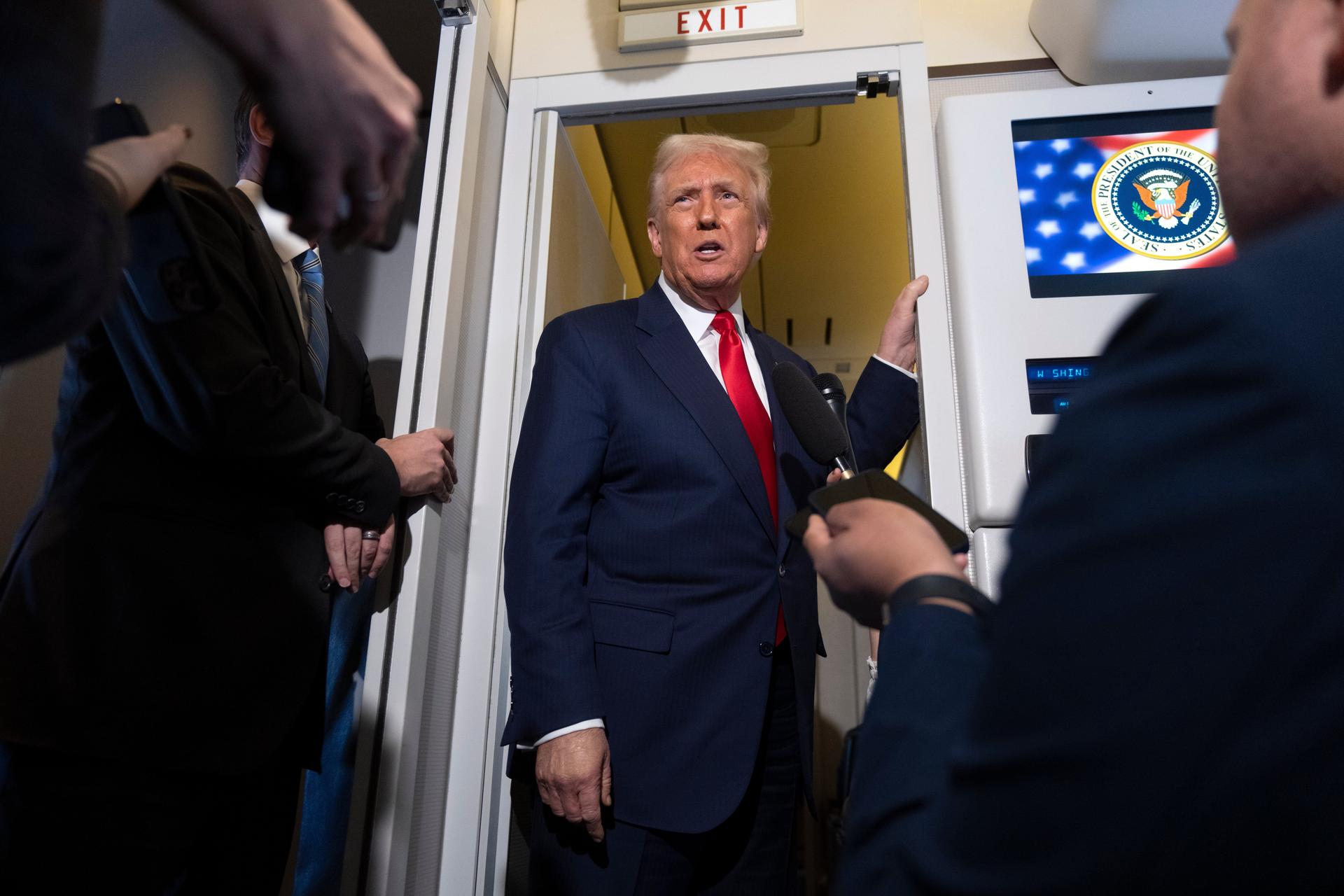
President Donald Trump speaks with reporters aboard Air Force One shortly after taking off from Busan, South Korea, en route to Joint Base Andrews, Md., Thursday. (AP Photo/Mark Schiefelbein)
|
Trump appears to suggest the US will resume testing nuclear weapons for first time in 30 years
|
President Donald Trump appeared to suggest the U.S. will resume testing nuclear weapons, saying it would be on an "equal basis" with Russia and China. Read more. |
|
|
- "Because of other countries testing programs, I have instructed the Department of War to start testing our Nuclear Weapons on an equal basis," Trump said in a post on Truth Social. "That process will begin immediately." The White House did not immediately respond to questions seeking more details.
There was no indication the U.S. would start detonating warheads, but the president offered few details about what seemed to be a significant shift in U.S. policy. The U.S. military already regularly tests its missiles that are capable of delivering a nuclear warhead, but it has not detonated the weapons since 1992 because of a test ban.
- Daryl Kimball, the executive director of the Washington-based Arms Control Association, quickly criticized the president's announcement and said Trump was "misinformed and out of touch."
|
|
|
Trump cuts tariffs on China after meeting Xi in South Korea
|
President Donald Trump described his face-to-face with Chinese leader Xi Jinping on Thursday as a roaring success, saying he would cut tariffs on China, while Beijing had agreed to allow the export of rare earth elements and start buying American soybeans. Read more. |
|
|
The president told reporters aboard Air Force One that the U.S. would lower tariffs implemented earlier this year as punishment on China for its selling of chemicals used to make fentanyl from 20% to 10%. That brings the total combined tariff rate on China down from 57% to 47%
"I guess on the scale from 0 to 10, with ten being the best, I would say the meeting was a 12," Trump said. "I think it was a 12." Trump said that he would go to China in April and Xi would come to the U.S. "some time after that." The president said they also discussed the export of more advanced computer chips to China, saying that Nvidia would be in talks with Chinese officials.
- Xi said Washington and Beijing would work to finalize their agreements to provide "peace of mind" to both countries and the rest of the world, according to a report on the meeting distributed by state media.
|
|
|
The US draws down troops on NATO's eastern flank as Europe frets about a security vacuum
|
The U.S. confirmed on Wednesday that it will reduce its troop presence on NATO's borders with Ukraine but shed no light on any future cuts, as its allies worry about a security gap being created at a time when Russia is increasingly confrontational. Read more. |
|
|
The U.S. armed forces denied it was a sign of lessened commitment to NATO. NATO allies have expressed concern that the Trump administration might leave a security vacuum as European countries confront an increasingly aggressive Russia. Analysts say it might tempt Russia to test the military alliance.
Depending on operations and exercises, around 80,000-100,000 U.S. troops are usually present on European soil. The administration has been reviewing its military "posture" in Europe and elsewhere, but U.S. officials have said that the findings of the review were not expected to be known before early next year.
|
|
|
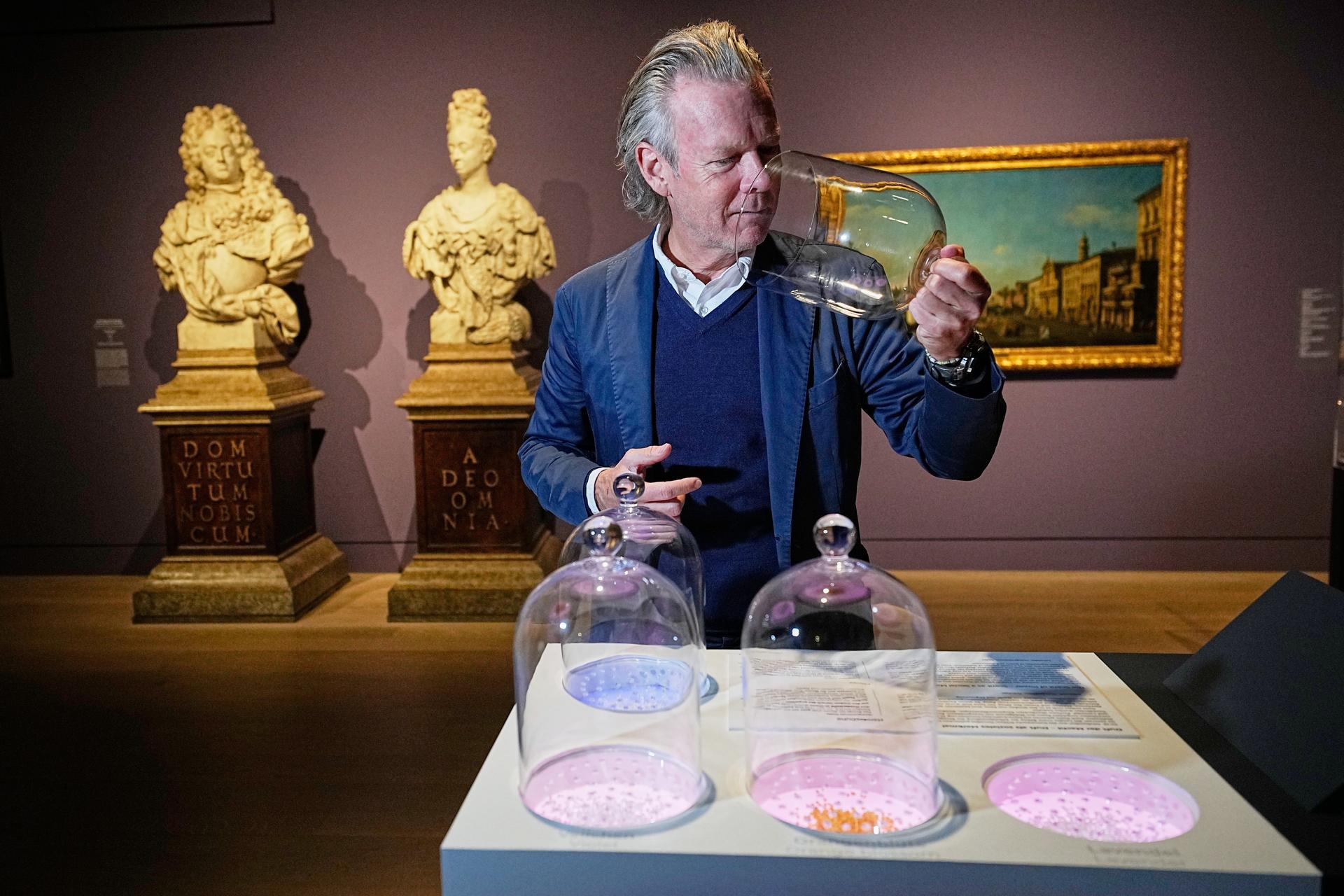
Curator Robert Mueller-Gruenow smells samples during the exhibition "The Secret Power of Scents", at the Kunstpalast art museum in Duesseldorf, Germany, Tuesday. (AP Photo/Martin Meissner)
|
German scents exhibition combines 1,000 years of fragrances with art and history
Ever wondered what war smells like? Or ponder the odor of love, or the stench of medieval Paris, or the sacred fragrance of religion? A new exhibition in Germany allows visitors to discover unknown worlds of smells by sniffing their way through 81 different fragrances across 37 different galleries. |
|
|
Please let us know what you think of this newsletter. You can sign up for more and invite a friend here. For news in real time visit APNews.com. - Sarah |
| |
|
Please let us know what you think of this newsletter. You can sign up for more and invite a friend here. For news in real time visit APNews.com. - Sarah |
| |
|
*Advertisers have no control over editorial decisions or content. If you're interested in advertising, contact us here. |
|
|
|