Policy changes, but facts endure. AP delivers accurate, fact-based journalism to keep the world informed in every administration. Support independent reporting today. Donate. |
|
|
In the news today: Republicans and Trump highlight different priorities for midterms campaigning; what victory might look like for Iran and the United States with no immediate end to the war in sight; and a new report suggests broader societal shifts might be at play in young kids' declining reading scores in the U.S. Also, an innkeeper's efforts to record radiation levels fifteen years after the Fukushima nuclear disaster. |
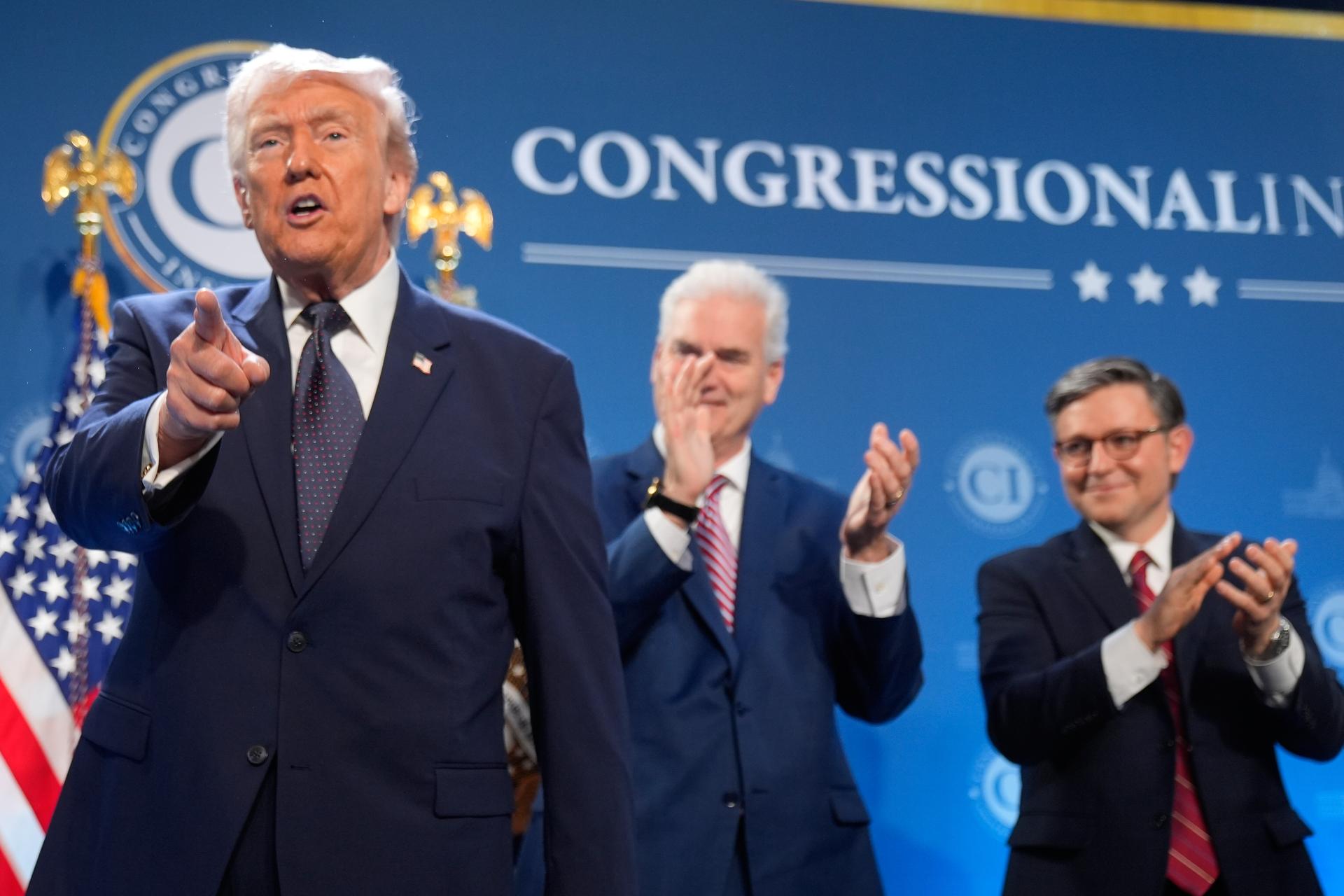
President Donald Trump gestures as Rep. Tom Emmer, R-Minn., and House Speaker Mike Johnson of La., applaud at the Republican Members Issues Conference, Monday in Doral, Fla. (AP Photo/Mark Schiefelbein) |
Trump has one prescription for midterms. House Republicans have another |
President Donald Trump insisted he had the answer for Republicans anxious about losing their congressional majority this year: build on an already strict national voter identification law to ban mail ballots and restrict transgender rights. Less than 24 hours later, House Republican leaders highlighted their priorities. And the voting bill isn't high on the list. Read more. |
|
|
- Just a few seats shy of losing their majority, senior Republicans are eager to emphasize the party's work to lower costs, none of which is easy to accomplish with only a few votes to spare, while Trump is often focused elsewhere. The war he initiated in Iran has disrupted the party's message on affordability.
In an effort to gain leverage over lawmakers, including some Republicans, Trump said he won't sign other legislation into law until the voting bill is passed. The bill is rooted in his insistence that he won the 2020 presidential election, claims rejected by dozens of courts and his own attorney general at the time. The dynamic isn't any easier in the Senate, where Republicans are struggling to pass the measure without Democratic support.
- Faced with a tough political calculus, House Speaker Mike Johnson is trying to shift focus to Democrats, in particular over the shutdown of the Department of Homeland Security, which has prompted security lines to swell at some airports over the past few days.
|
|
|
Iran war becomes a contest of who can take the most pain |
The war with Iran, for all its complexity and global effects, boils down to a single question: Who can take the pain the longest? A surge in oil prices points to what may be Iran's most effective weapon and the United States' biggest vulnerability in continuing the campaign: Damaging the world economy. Read more. |
|
|
There's no immediate end to the war in sight — nor in the rhetoric coming from both America and Iran. For Iran's rulers, victory means surviving the campaign still in power, no matter the costs to the country and the region.
Trump has been vague and contradictory about his aims in the war. At times, he seems to push for overthrowing Iran's theocracy; other times, he seems to be willing to stop short of that, saying broadly that he wants to ensure Iran is no longer a threat to Israel, the region and the U.S. That could give him flexibility in declaring that victory has been achieved.
- The pressure is on U.S. allies as well. Gulf Arab states, while still not combatants in the war, face seemingly unending and occasionally fatal Iranian fire targeting oil fields, cities and critical water works. And Israel, while boasting of inflicting heavy damage on Iran's missile program and other military targets, continues to be targeted by increasingly sophisticated Iranian missiles.
|
|
|
Young kids missed the pandemic's school disruptions. Their reading scores are still behind |
Young students are still struggling to bounce back academically from the pandemic, even though many were babies at the time. In new data from research and testing group NWEA, first and second graders are scoring below kids pre-pandemic in math and reading. Read more. |
|
|
Researchers say the problem looks bigger than impacts from the pandemic. They point to emerging data that suggest parents are reading less to kids. Testing for younger kids is less common, so the report offers insights into the depth of the academic disruption.
The federal government gave billions of dollars to school districts to help students catch up — with mixed results. In 2024, reading scores for fourth and eighth graders continued a downward slide, according to the National Assessment of Educational Progress. Math scores, however, trended upward.
- Schools are beginning to make concessions to accommodate students with weaker literacy skills and short attention spans. Many teachers no longer assign books to their students.
|
|
|
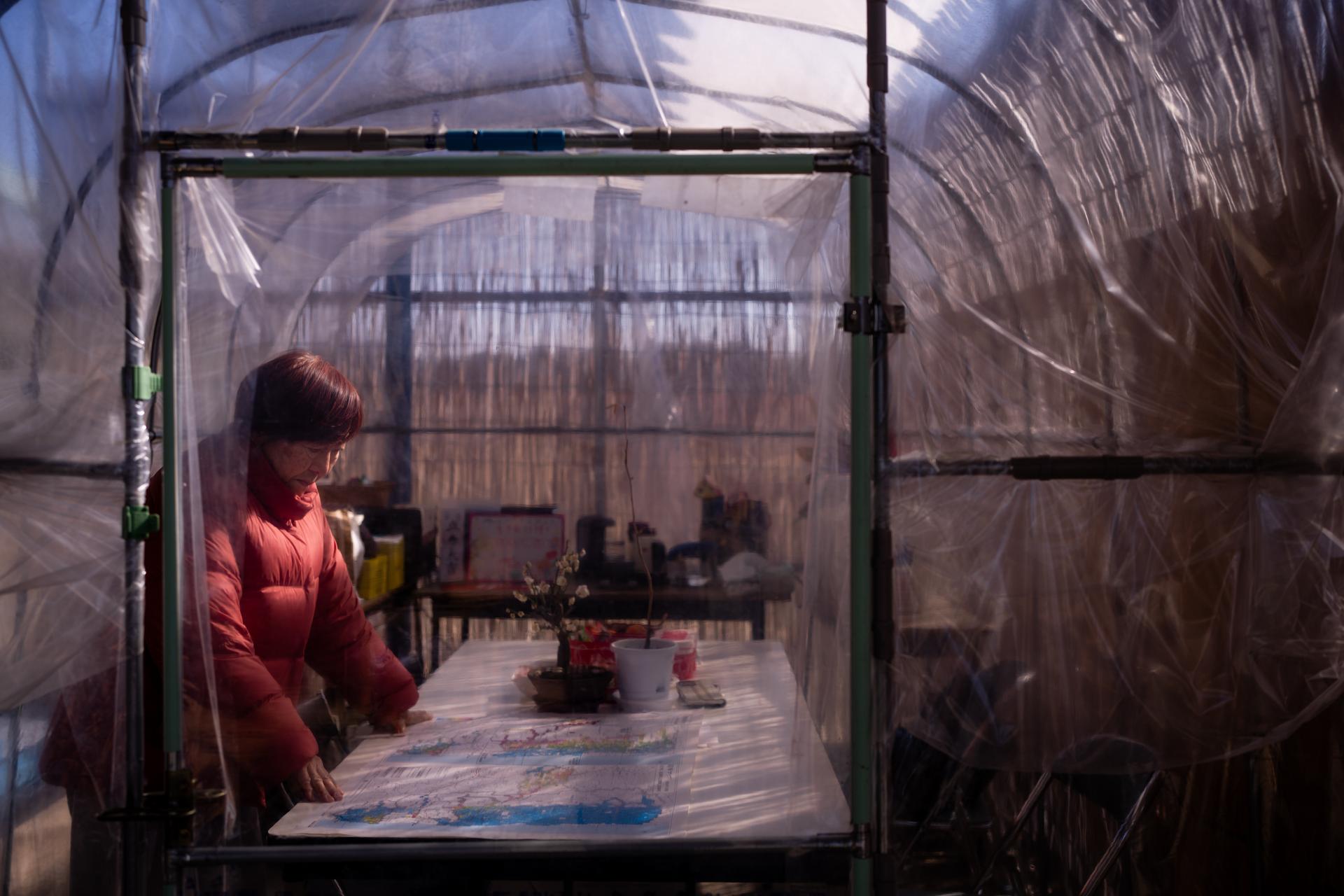
Tomoko Kobayashi looks at a color-coded map of radiation levels created by residents in Odaka, Feb. 13, 2026. (AP Photo/Louise Delmotte) |
15 years after Fukushima meltdown, an innkeeper makes radiation surveys to revitalize her hometown
Fifteen years after one of history's worst nuclear disasters, Tomoko Kobayashi's hometown in northeastern Fukushima remains nearly deserted. But her family-run inn is receiving some guests, including students and others who want to learn about Fukushima, as well as people interested in opening new businesses. Kobayashi has conducted her own radiation surveys since reopening the inn in 2016, and shares radiation data with other monitors as part of efforts to rebuild the once-bustling textile town of Odaka.
|
|
|
Please let us know what you think of this newsletter. You can sign up for more and invite a friend here. For news in real time visit APNews.com. - Siddharth |
| |
|
Please let us know what you think of this newsletter. You can sign up for more and invite a friend here. For news in real time visit APNews.com. - Siddharth |
| |
|
*Advertisers have no control over editorial decisions or content. If you're interested in advertising, contact us here. |
|
|
|