News without an agenda. AP is a not-for-profit organization with no corporate parent, no shareholders and no government influence. Our mission is journalism, not profit margins. Your donation supports independent reporting that serves the public interest, not corporate shareholders. Donate today.
|
|
|
In the news today: Trump still teases a third presidential run, but he’s talking more about life after 2028; the economic impact of the Iran war; and the rise of the three-year college degree. Also, caring for ancient papyrus manuscripts.
|
President Donald Trump boards Air Force One, Aug. 4, at Joint Base Andrews, Md. (AP Photo/Mark Schiefelbein)
|
Trump still teases a third presidential run, but he’s talking more and more about life after 2028
|
President Donald Trump has frequently suggested he wants to seek a third term, posting about mounting another campaign, donning 2028 caps and discussing ways to make it happen — even as he’s acknowledged the Constitution prohibits it. But lately, Trump has begun showing signs that even he doesn’t really believe another run will happen. Read more.
|
|
|
|
Iran war economic impact: Consumers struggle as investors prosper
|
As the U.S. and Israel relentlessly bombed Iran in the opening days of war, the most dramatic predictions of the conflict’s toll were unsparing: surging oil prices, worldwide recession and economic catastrophe. But six months into the conflict, the direst predictions haven’t come true even if no corner of the world’s economy has been untouched. Read more.
|
|
|
A major turnaround has unfolded since the market bottomed in late March. The Dow has gained nearly 19%, the S&P is up almost 22% and the Nasdaq has surged 27%. If those gains survive the waning months of 2026, all three indexes would post their fourth consecutive year of gains.
The war’s most obvious economic consequence has been its impact on oil. With tanker movement through the Strait of Hormuz slowed to a crawl, the price of Brent crude climbed from a prewar close of about $72 a barrel to as high as nearly $120. Although oil prices have eased, they are still up about 20% from before the war. Oil’s price affects everything from crayons to cosmetics, but it hits anyone on the move especially hard.
|
|
|
3-year college degrees grow more popular in the US, saving time and cash. But critics aren’t sold
|
Condensed programs have exploded in popularity. As of this spring, 26 U.S. states have a college that offers at least one reduced-credit, three-year bachelor’s, according to the nonprofit research group RAND. Read more.
|
|
|
Advocates say these programs are a solution to the college affordability crisis and a godsend for non-traditional students. Critics, however, worry that they’ll narrow too much what students learn, confuse employers, limit graduate school options and create headaches in fields that require state licenses.
For decades, colleges have offered accelerated programs that let students finish faster, often by forgoing long summer breaks, maximizing transfer credits and condensing semester-long courses into shorter, five- to 10-week terms. But those programs maintained the same course load, measured as credits. The new programs let students finish faster by completing as few as 90 credit hours. That shaves a year off the typical 120-hour bachelor’s degree.
|
|
|
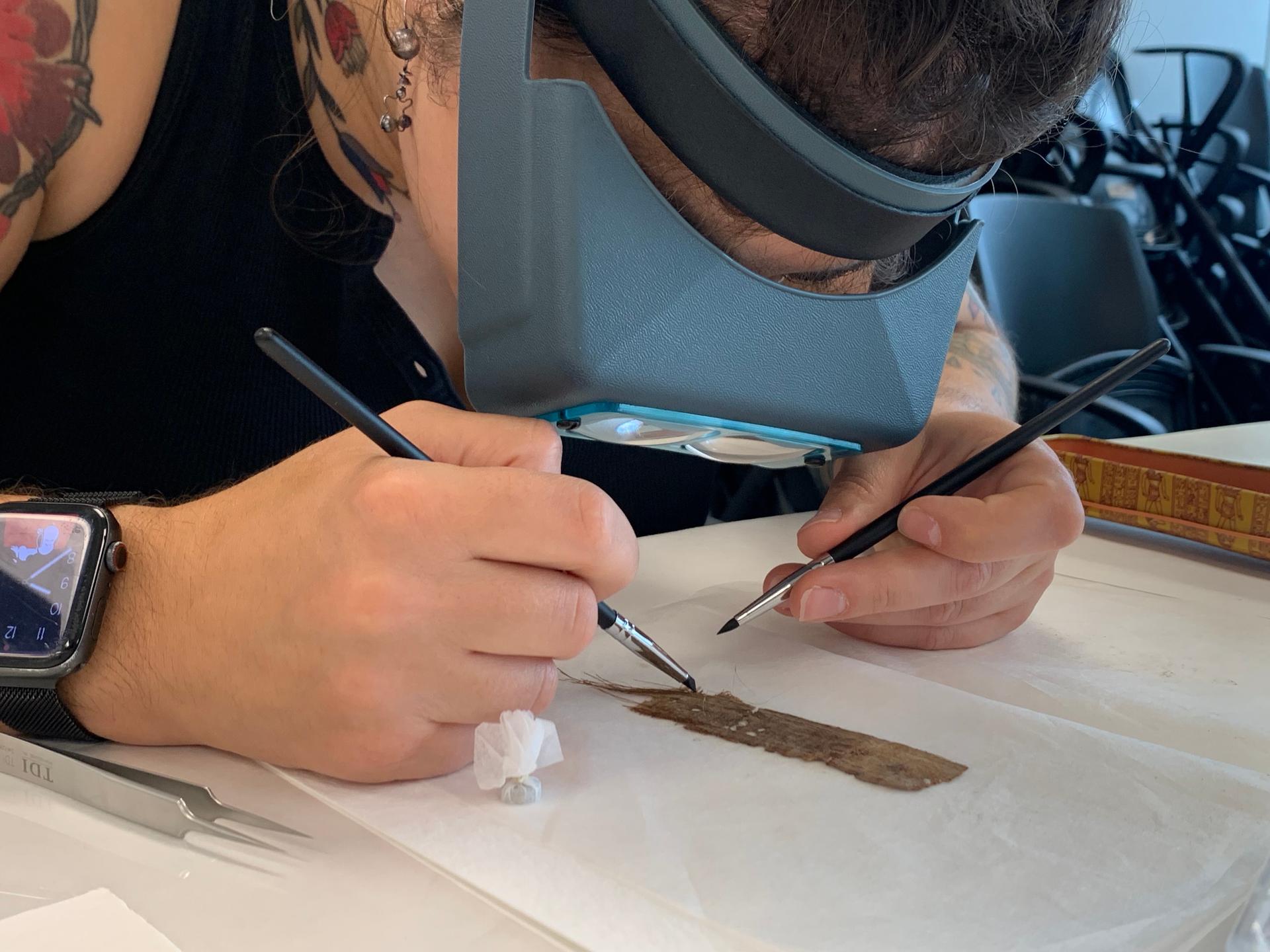
Papyrus Conservation Summer Seminar student Mimi Zycherman examines a papyrus fragment at the University of Michigan, Aug. 6, in Ann Arbor, Mich. (AP Photo/Mike Householder)
|
Inside one of the world’s few crash courses in conserving and caring for ancient papyrus manuscripts
When you see an ancient treasure at a museum, there’s a story behind it of careful work to preserve it for us and future generations to see. We got a look at that at the Papyrus Conservation Summer Seminar at the University of Michigan. It’s the only one of its kind in the Americas, according to the university. And it’s one of the few in the world designed to convey the best practices for conserving papyrus manuscripts, ancient texts written on rolls or sheets made from the papyrus plant. Michigan’s Papyrology Collection covers texts and documents from 1000 B.C.E. to 1000 C.E.
|
|
|
|
That's all for today. Know someone who would enjoy Morning Wire? Forward this newsletter to them. They can also sign up here. - Mark
|
|
|
|
|
That's all for today. Know someone who would enjoy Morning Wire? Forward this newsletter to them. They can also sign up here. - Mark
|
|
|
|
|
*Advertisers have no control over editorial decisions or content. If you're interested in advertising, contact us here.
|
|
|
|
|